
Sweep Gradients
Sweep Gradient (a.k.a. “conical gradient”) fills a closed area or a selection with colors smoothly blending around the center point. The number of intermediate color steps is practically unlimited. Color stops may have different opacity so the gradient may smoothly blend into existing artwork.
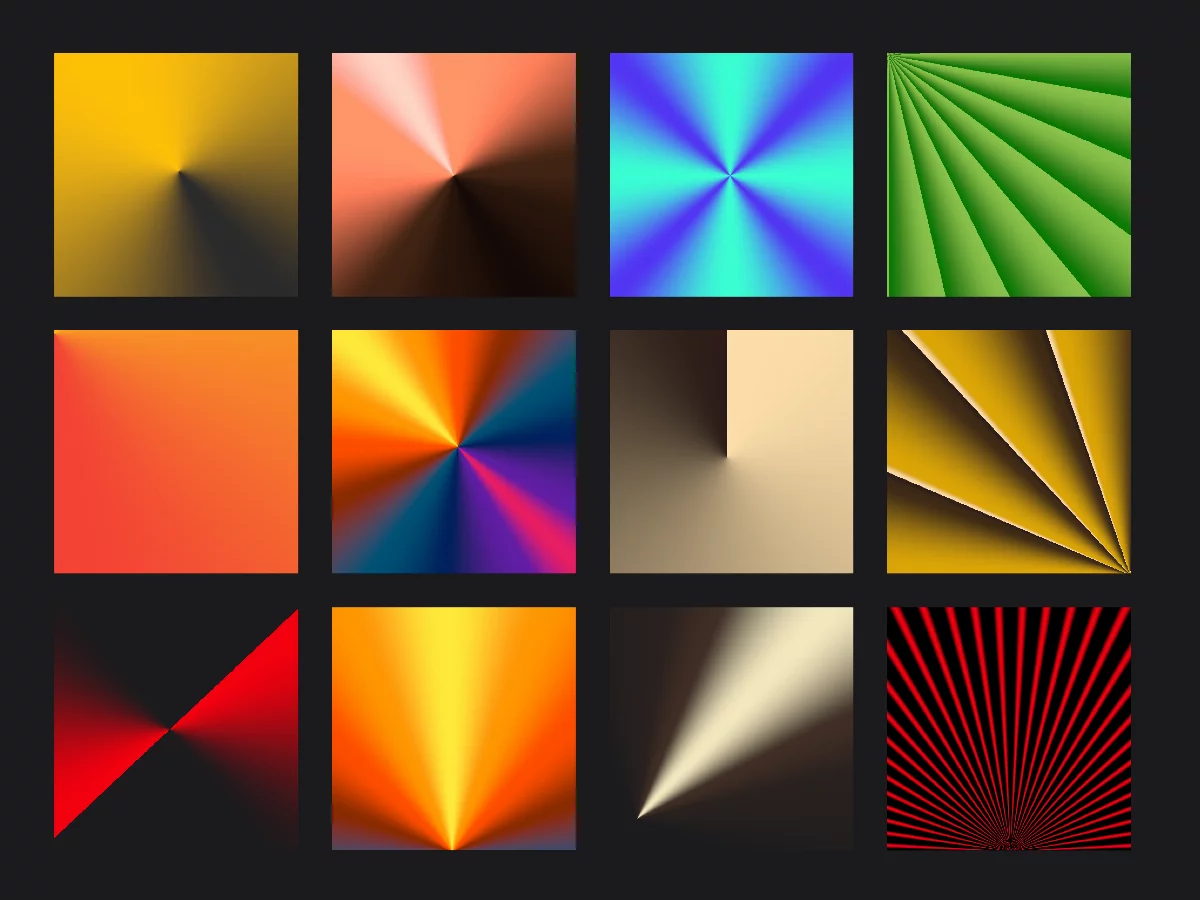
Repetition function may add complexity to the fill. See Sweep Gradient Fill — options.
Sweep Fill always fills full 360 around the center point, however you can define transparent color stops to limit it to a sector.
Application
From top to bottom.
Drag out from the center point
The distance doesn’t matter here.
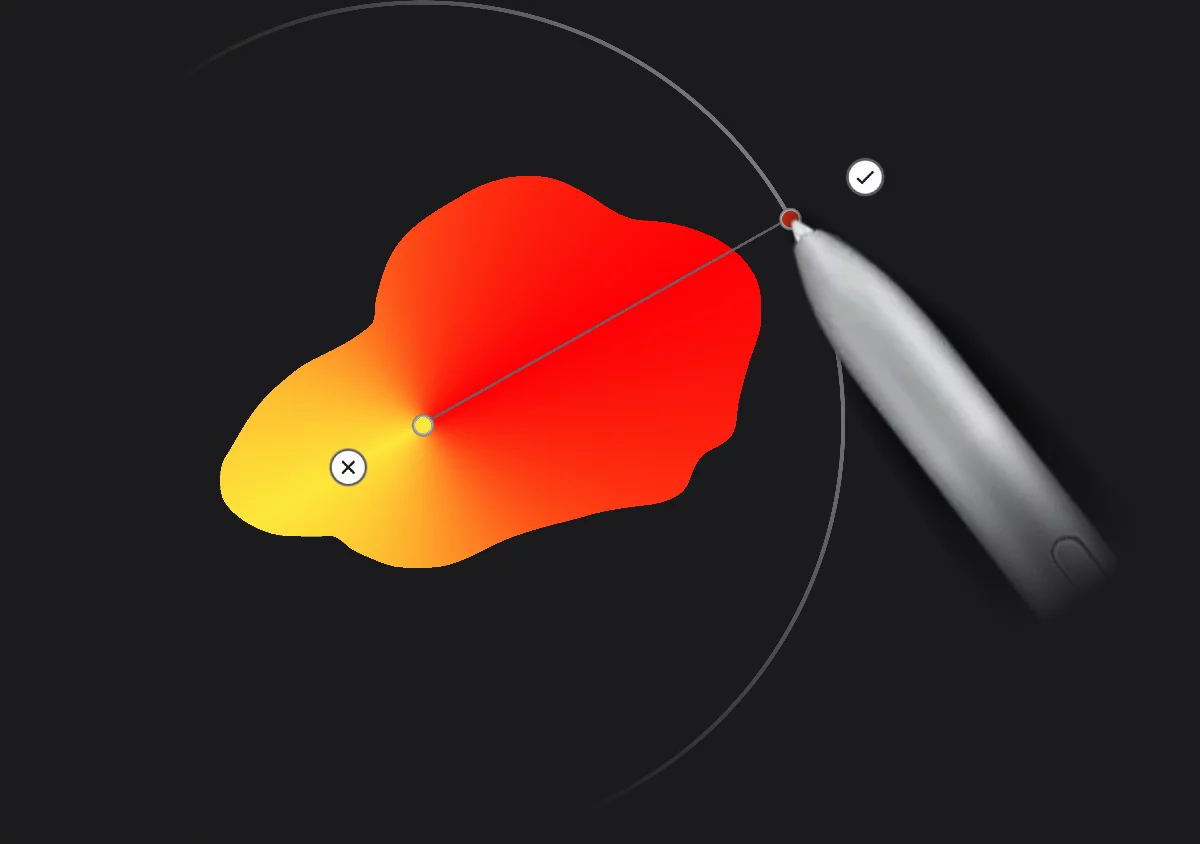
You are supposed to edit and add the colors after application of the fill. This is different than for example in Adobe Photoshop®.
There are no gradient presets in Infinite Painter.
Note that when you apply a gradient for the first time, it is based on the current Paint colorPaint colorThe color currently picked with the Color panel. All brushes and fills will use this color as their base color. The sample of the current paint color is always shown on the main toolbar.
In Infinite Painter there is only one “current” color (there is no concept of a “background color” for the brushes and gradients).. On subsequent fills the previous gradient is used.

You can edit the gradient unless you confirm it with the checkmark button (or until you close the tool).
Basic controls
Exactly like the Linear and Radial Gradients.
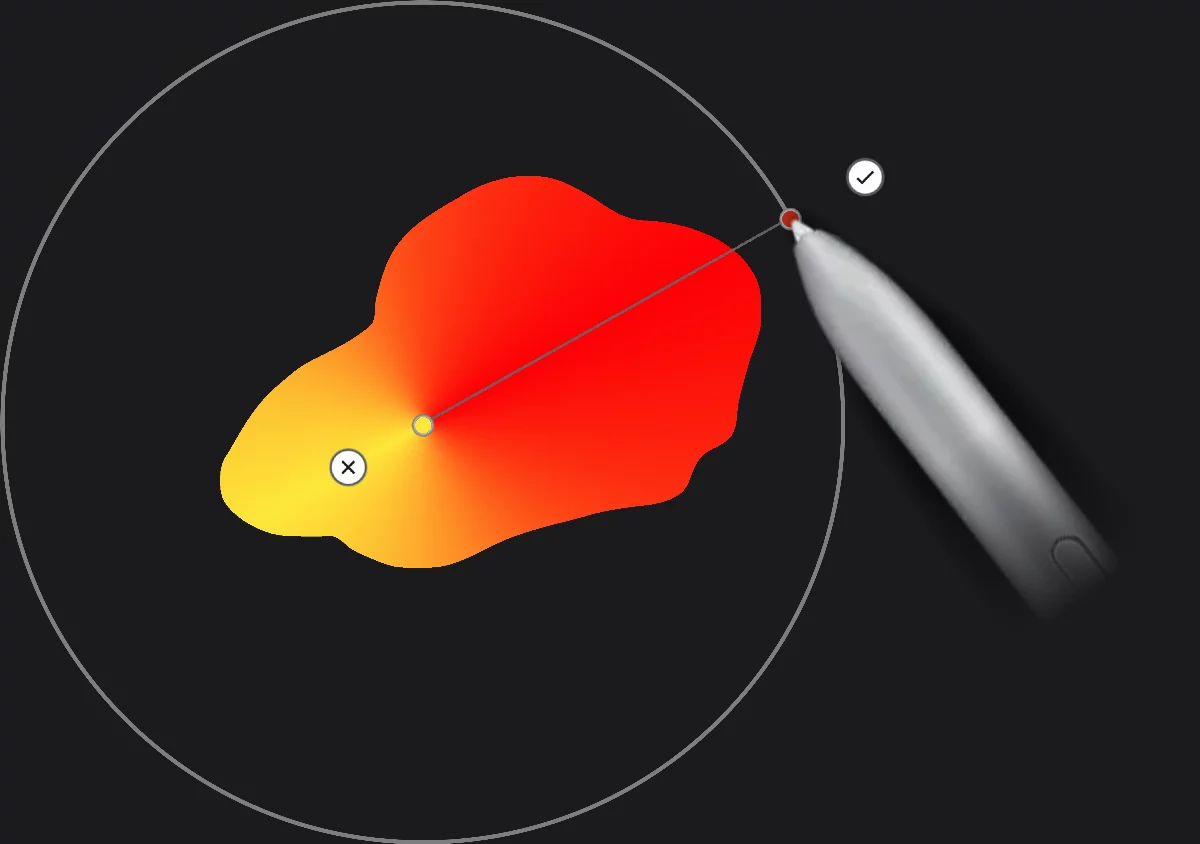
Center color stop
Drag to reposition.
Tap to change the color (opens the color picker).
End color stop
Drag to reposition.
Tap to change the color.
Gradient axis
Drag the axis to reposition the entire gradient.
Tap to add a new color stop.
Cancel button
Tap to cancel current gradient. Previously applied fills will stay intact.
Confirm button
Applies the current fill. Then you may apply another fill or leave the tool.
Gradient circumference
Visual indication of the fill area (disappears when you release the stylus/finger).

You can edit the gradient unless you: confirm it with the checkmark button or cancel it with the X button (or close the Fill toolbar).
Options
For basic two-color gradient.


Default sweep gradient
(Note that for the Sweep gradient, the Reflect option is on by default, what produces smooth conical shading.)
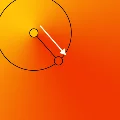
Number of repetitions
Drag the circular slider left-right to set the number o repetitions.
Repeat (here: 6 times)
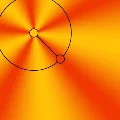

Reflect off


Reverse direction (toggle)
(swaps start and end of the gradient axis).

You can use the repeat function (with reflect off) for “rays” effects:
Repeat + Reflect off

Repeat up to 100 times

Understanding the control axis
The color stops on the axis map onto the gradient circumference. However, the default setting is the Reflect option on, so the axis maps onto a half of the circumference.
Reflect on (default)
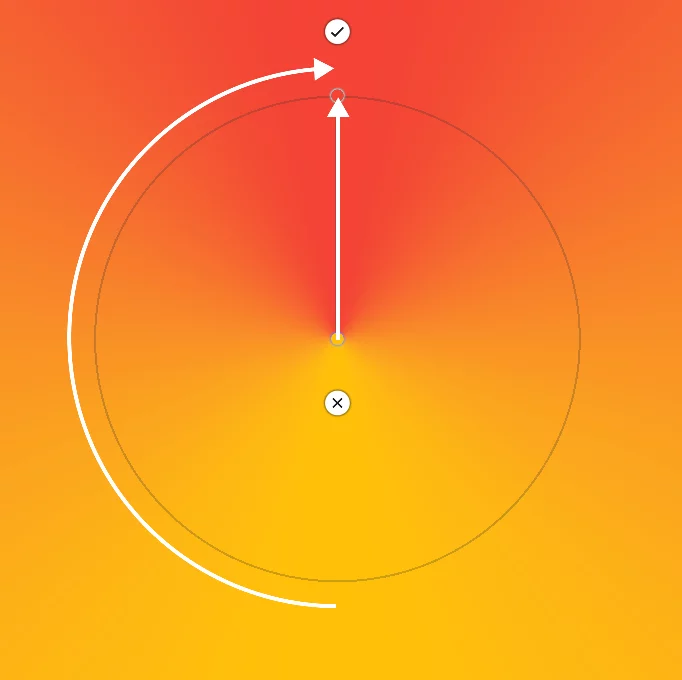
The gradient axis maps onto 180° (half-circle).
Reflect off
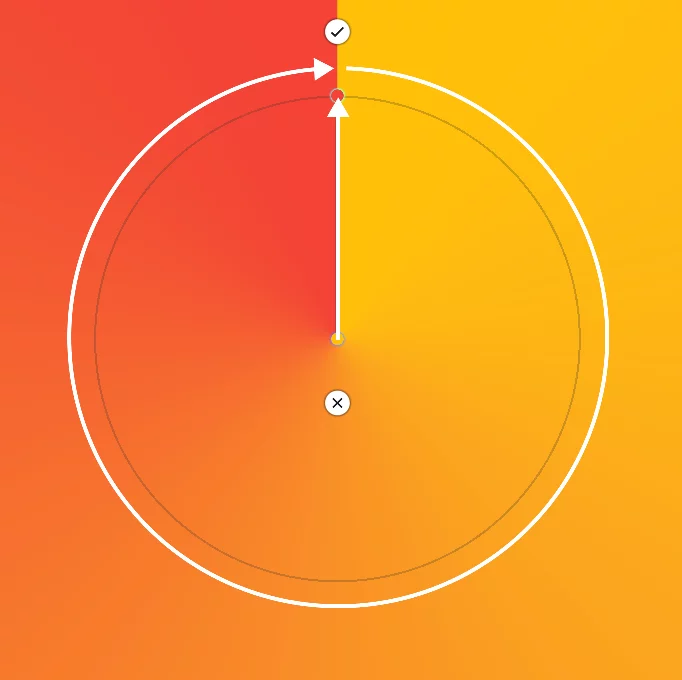
The gradient axis maps onto full 360° (full circle).
Adding intermediate colors
You add color stops on the control axis, but the colors appear on the gradient circumference.
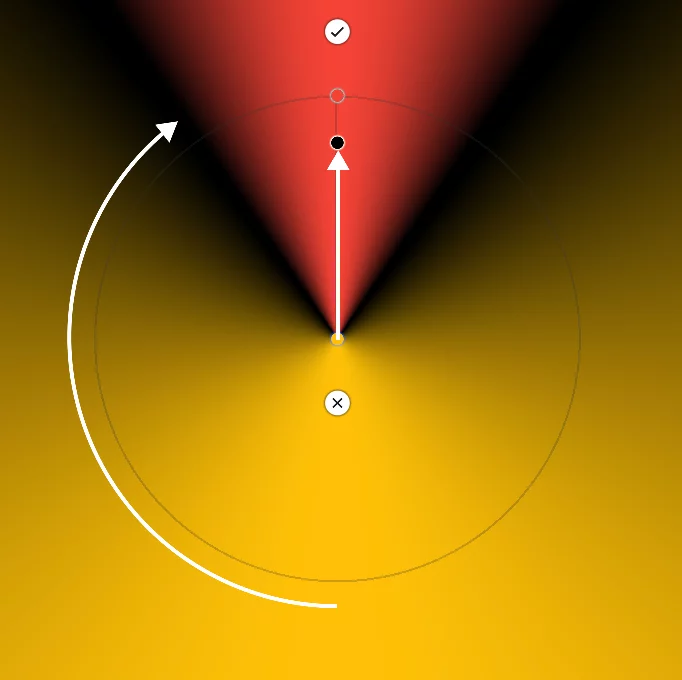
The added color stop (here: black)
The resulting new color sector
(or rather two symmetrical color sectors)
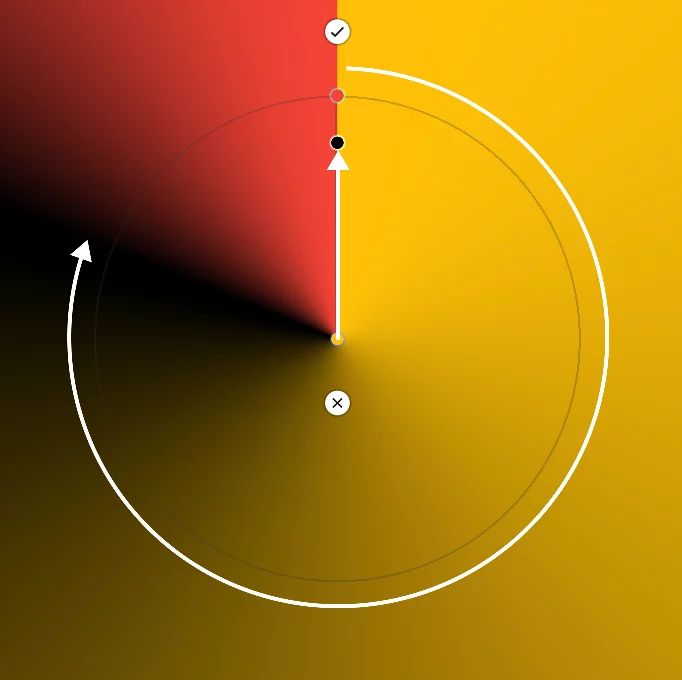
The added color stop
The resulting new color sector